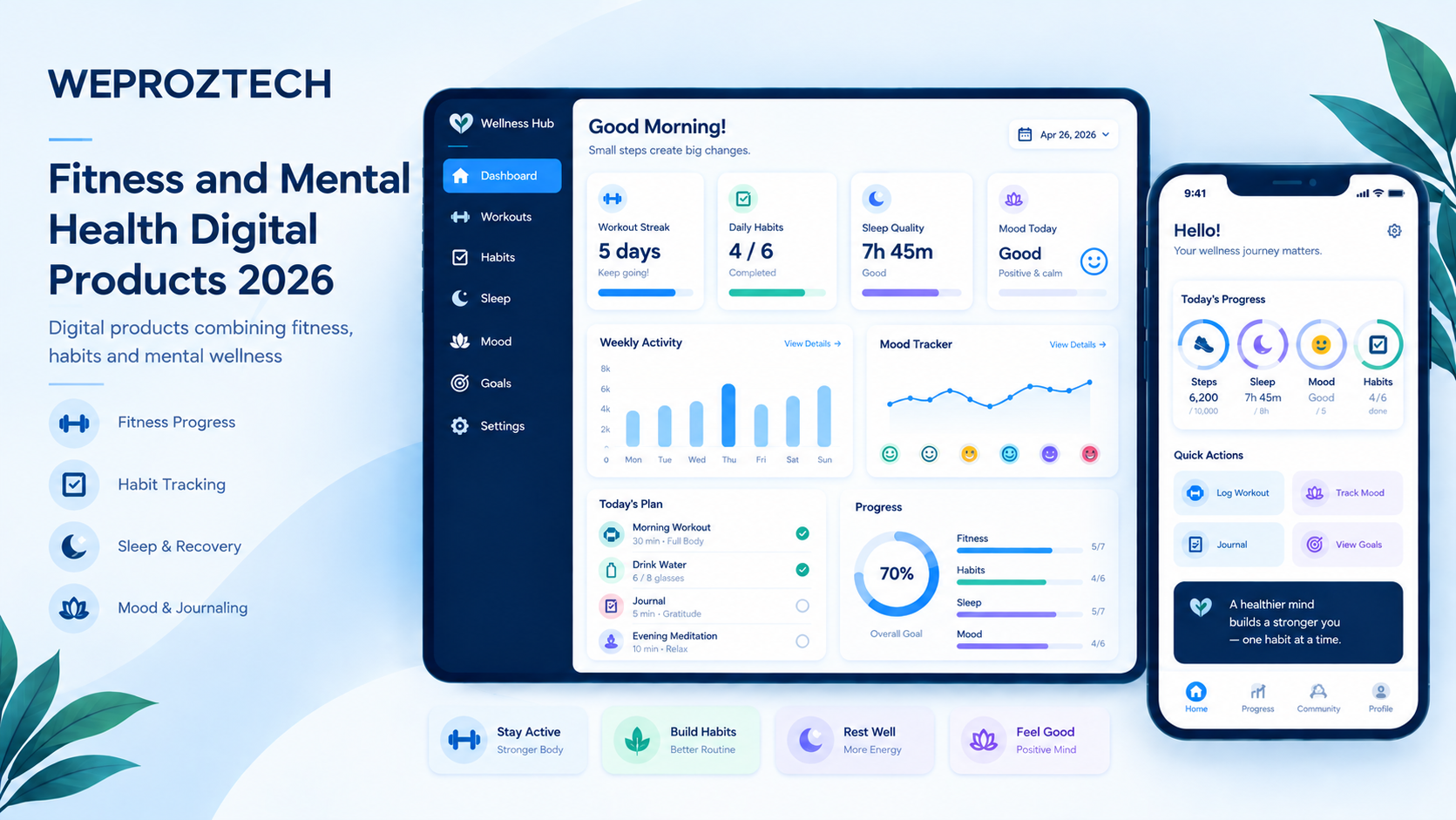
The fitness and mental wellness market is moving beyond simple workout PDFs and basic habit trackers. In 2026, digital products can bring fitness routines, daily habits, stress management, sleep, journaling and progress tracking together in one simple experience.
A wellness product does not always need to be a complex mobile app. It can be an interactive planner, digital toolkit, guided programme, membership community or wellness dashboard. The key is to solve a specific problem and make the product genuinely useful for its target audience.
Why Mind-Body Digital Products Are Growing
Fitness and mental wellbeing often go together in everyday life. Someone trying to exercise regularly may also want better sleep, improved habits, stress-management tools or a simple way to track progress.
This creates an opportunity for mind-body wellness products that combine different parts of a user's routine. Instead of offering only a workout plan, a digital product can help users track exercise, sleep, hydration, mood, recovery and personal goals in one place.
Digital self-help is also becoming more accessible. In its 2026 guidance, the World Health Organization describes structured psychological self-help that can be delivered through digital platforms, video and other formats, with or without brief support.
For businesses, the focus should not simply be on putting health information into an app. The product should have a clear audience, simple user experience, responsible content and appropriate privacy practices.
Best Fitness and Mental Health Digital Product Ideas for 2026
An interactive fitness and wellness planner is one practical option. Instead of a static PDF, it can include workout goals, habit checklists, sleep tracking, journaling and weekly progress reviews. Hyperlinked sections can make the planner easier to use on phones and tablets.
A combined habit and recovery tracker can allow users to record workouts, water intake, sleep, energy, mood and daily habits. Weekly summaries can then help users see their own patterns instead of simply storing information.
Another option is a 30-day or 12-week wellness programme. It can combine daily activities, educational content, habit challenges, reflection exercises and progress tracking. Different programmes can be created for beginners, home workouts, busy professionals or general wellness.
A digital stress-management and journaling toolkit can include journaling prompts, relaxation exercises, reflection pages, reminders and educational resources. Such products should be positioned carefully and should not make unsupported claims about diagnosing or treating medical conditions.
For creators who already have an audience, a wellness membership community can provide recurring content such as monthly challenges, new planners, educational sessions and downloadable resources
 Wellness Dashboards and Personalised Digital Products
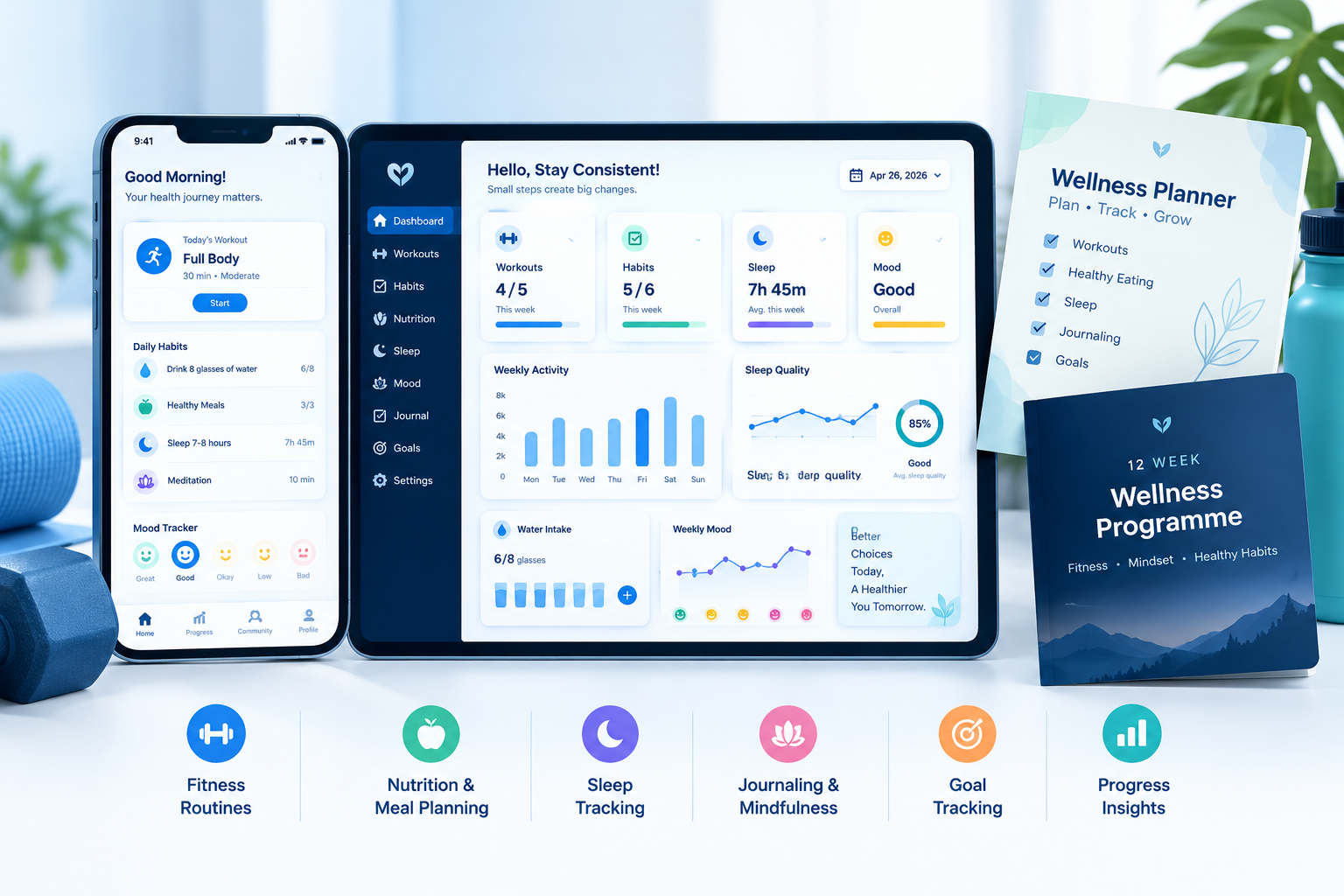
A more advanced idea is an integrated wellness dashboard. Instead of using separate tools for fitness, habits and wellbeing, users can view selected information in one place.
For example, a dashboard could show workout frequency, sleep information, habit consistency and self-reported mood. It can also provide simple progress summaries and reminders based on the information users choose to track.
A business can start with a simple digital product and later develop it into a web or mobile application with user accounts, subscriptions, dashboards and personalised content.
For businesses interested in healthcare technology, WEPROZTECH's health care software development services article explains how software, analytics, integrations and secure user management can be used in healthcare platforms.
Businesses can also consider RPA automation in healthcare when repetitive operational processes become part of a larger healthcare or wellness platform.
 AI and Personalisation in Wellness Products
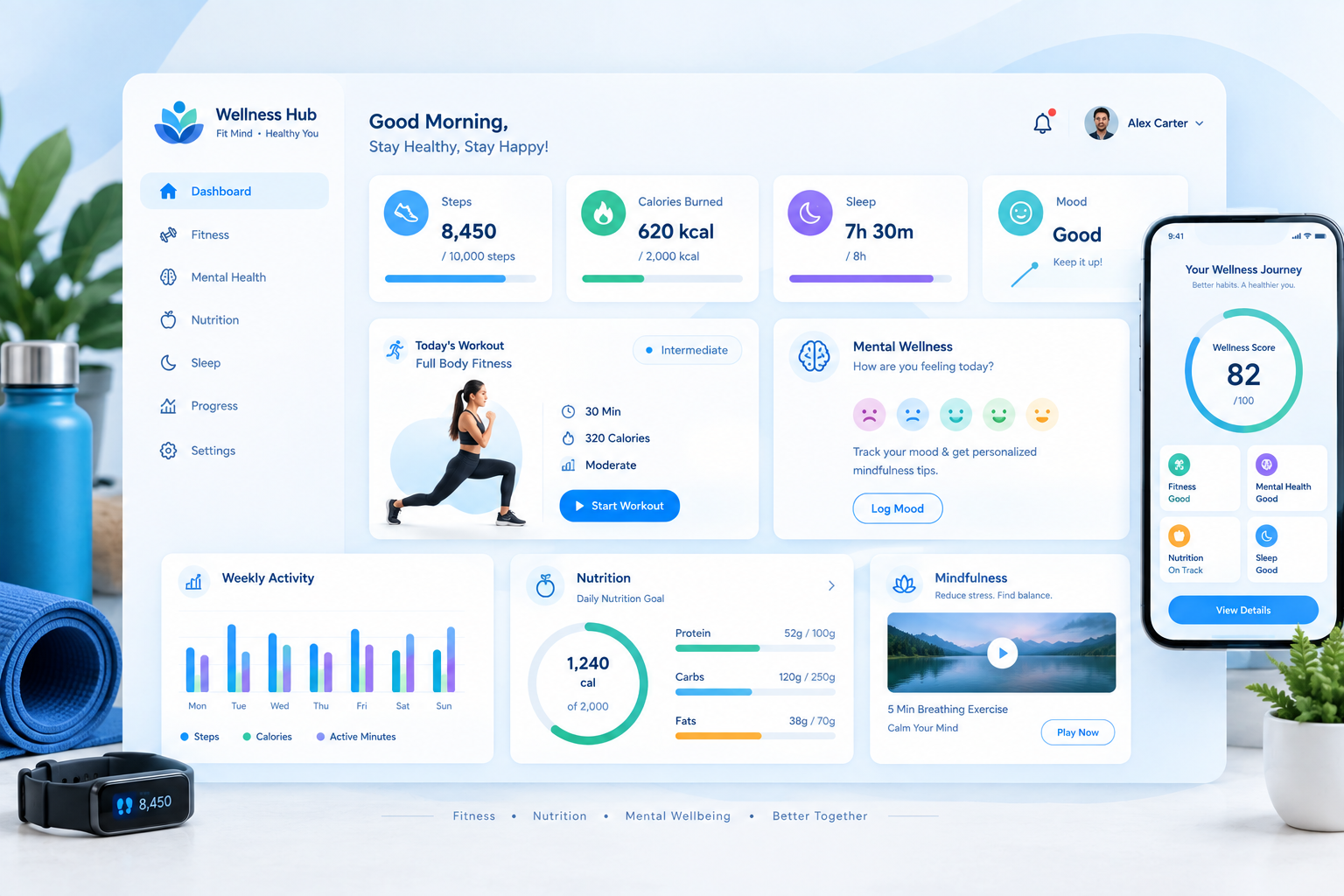
AI can make a wellness product more personalised when it is used for practical tasks. For example, an application can organise user goals, recommend relevant content, summarise activity history or help users find suitable workouts based on their preferences.
However, AI should have clear boundaries. A general wellness application should not present an AI system as a doctor, therapist or diagnostic tool without the appropriate clinical and regulatory basis.
Businesses exploring AI-based workflows can also read WEPROZTECH's AI agents for small businesses in India article to understand how AI can connect with applications, databases and communication workflows.
 How to Turn a Wellness Idea Into a Digital Product
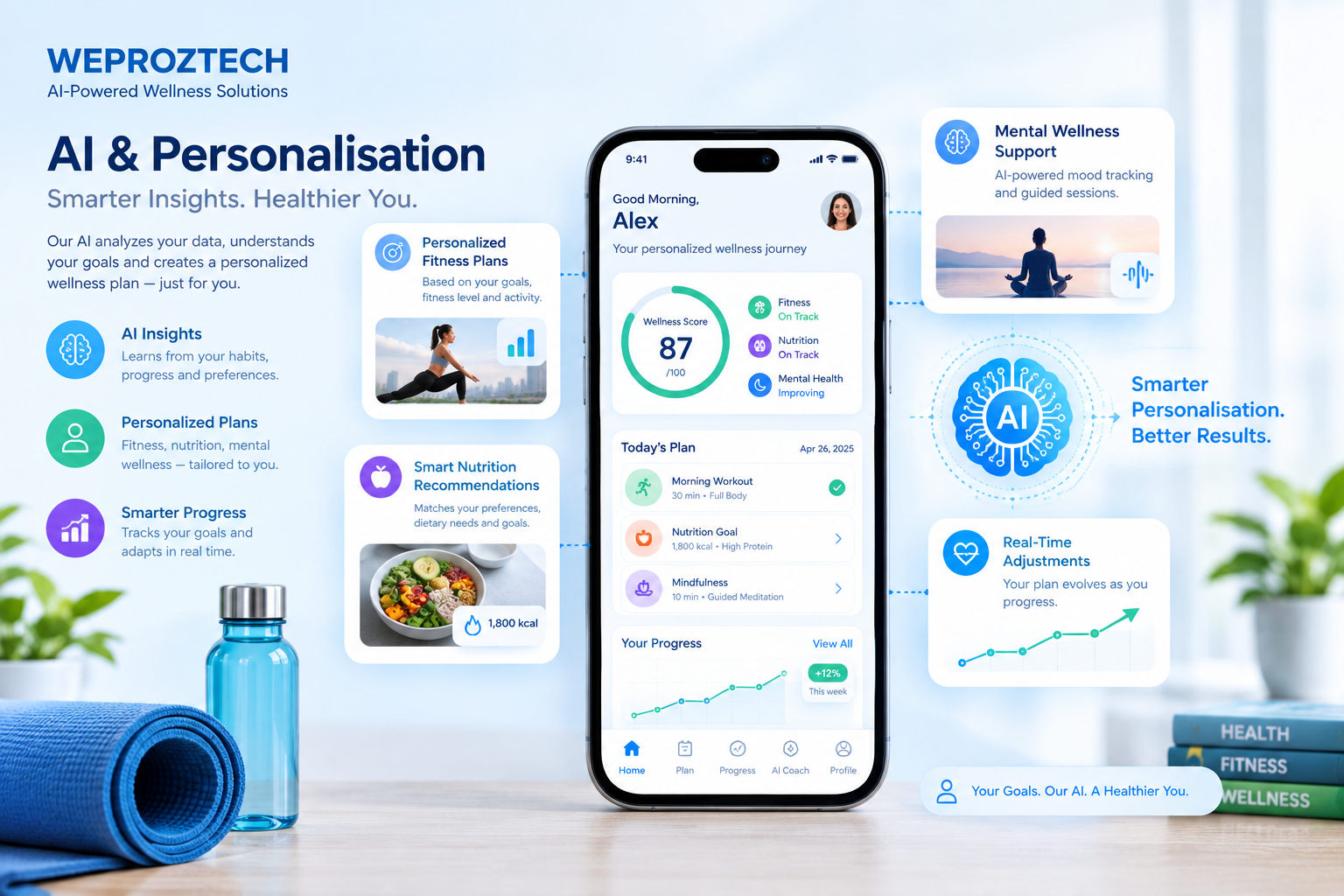
Start with a specific audience instead of trying to build a product for everyone. You could target beginners who want to build exercise habits, professionals looking for structured wellness routines, people interested in journaling or fitness coaches who want to sell digital programmes.
Choose the product format according to the problem. A planner may be enough for a simple use case, while a mobile app or subscription platform may be more suitable when users need regular content, personal accounts and progress tracking.
A simple development process can be:
Choose a Niche → Identify the Problem → Build an MVP → Test With Users → Improve → Launch → Grow
Once the product grows, it can be connected with payments, CRM, analytics, email and WhatsApp. For example, WhatsApp automation can support selected customer communication and follow-up workflows.
For managing larger volumes of customer enquiries, WhatsApp CRM can help organise conversations and customer information.
Important Considerations Before Selling a Wellness Product
Wellness and mental-health products require more care than ordinary digital downloads. Avoid claims such as guaranteed weight loss, curing anxiety or treating depression unless there is appropriate evidence and legal support.
The FTC The FTC Health Products Compliance Guidance states that health-related product claims should be truthful, not misleading and supported by appropriate evidence. It also highlights privacy and security as important considerations for mobile health apps.
Mental wellness products should also clearly explain what they are designed to provide and should not suggest that they replace professional healthcare. WHO specifically describes self-care as something that complements, rather than replaces, health systems and health workers.
For technology businesses, user consent, secure data handling and access controls should therefore be considered during development, not after launch.
Final Thoughts
Fitness and mental health digital product ideas in 2026 are moving towards products that combine useful content with tracking, personalisation and a simple user experience.
Digital planners, habit trackers, wellness programmes, journaling tools, membership communities and integrated dashboards can all be developed at different levels of complexity. A focused product that solves one clear problem can be easier to launch and improve than a large application packed with unnecessary features.
As the product grows, businesses can gradually add personalised dashboards, subscriptions, AI features, mobile apps and third-party integrations.
For businesses planning a complete digital wellness product, WEPROZTECH can support the technology side through web development, mobile applications, AI solutions, automation, CRM integration and custom software development.contact WEPROZTECH to discuss your requirements.
Frequently Asked Questions (FAQ)
They are digital products designed around fitness, healthy habits, wellbeing, stress management, journaling or personal progress. They can include apps, planners, programmes, dashboards and membership platforms.
Interactive fitness planners, habit trackers, structured wellness programmes and personalised wellness dashboards are some practical options.
Yes. AI can be used for personalisation, recommendations, content discovery and user engagement, provided its capabilities and limitations are clearly defined.
Yes. A wellness planner can be sold as a downloadable product, subscription resource or part of a larger wellness membership.
The cost depends on features such as user accounts, dashboards, mobile apps, AI, payments, integrations and admin tools. A simple MVP generally requires less development than a complete personalised platform.