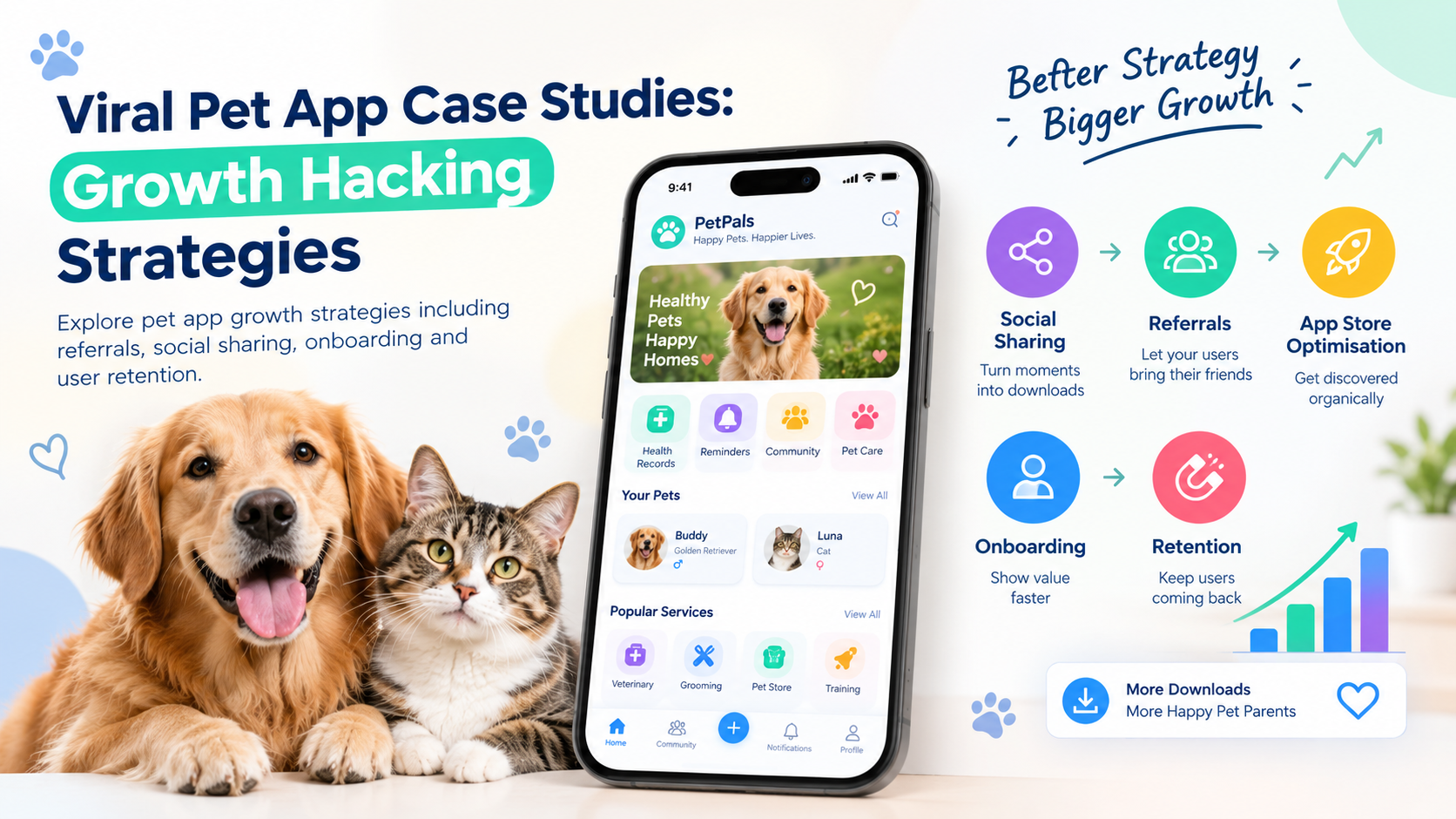
Pet apps are becoming useful tools for pet parents who want to track their pets’ health, find nearby services, discover pet-friendly places, connect with other owners or adopt animals. However, launching a pet app is only the first step. The bigger challenge is attracting the right users, encouraging them to return and making the app valuable enough for them to recommend it to others.
Viral pet app case studies and growth hacking offer practical lessons for developers, startups and businesses planning to enter the pet technology market. Successful growth often comes from solving a real problem, building trust with pet owners, encouraging sharing and improving the user experience based on actual behaviour.
What Makes a Pet App Go Viral?
Pet owners naturally share photos, funny moments, health milestones and stories about their animals. A pet app can use these behaviours to encourage organic discovery, provided sharing offers genuine value instead of feeling like an advertisement.
For example, a pet health app could let owners create shareable vaccination reminders, growth charts or milestone cards. A pet community app might allow users to share profiles, arrange playdates or invite friends to local pet events. An adoption platform can make it easy to share an animal’s profile with potential adopters.
The important factor is the viral loop. A user discovers a useful feature, shares it with someone else, and that person has a reason to visit or install the app. If the new user also finds value and shares something, the cycle can continue.
Virality alone is not enough. If users install an app after seeing a viral video but never return, downloads may increase without creating a sustainable business. Growth hacking should therefore focus on acquisition, activation, retention and referrals together.
Real Viral Pet App Case Studies
1. Pedigree Found: Turning a Lost-Pet Problem into App Adoption
The Pedigree Found campaign in New Zealand addressed a serious problem for dog owners: finding a missing pet. The app enabled owners to send alerts through the Google Display Network when their dog went missing. The campaign combined targeted social media advertising with public relations focused on both the emotional importance of finding lost dogs and the technology behind the service.
According to the published Pedigree Found case study, 10% of New Zealand dog owners downloaded the app, 117 dogs were found at a reported cost of $25 per dog, and Pedigree's market share reached a five-year high.
Growth lesson: Solve a problem that pet owners urgently care about. A clear purpose gives people a reason to download an app, discuss it with others and share it with their community. For a new product, this may be more effective than promoting a long list of features.
2. Pets at Home VIP App: Personalisation and Retention
Pets at Home enhanced its Very Important Pets (VIP) loyalty app with personalised communications. Its approach included pet-relevant content, educational messages, humour and personalised imagery based on pet type, breed and pet name when available.
The published Pets at Home case study reported more than £34 million in incremental sales, a 10% increase in retention and 27.1 million pet registrations.
The lesson is that growth does not end after installation. Relevant information and useful offers can give users reasons to return. A pet app could personalise reminders according to a pet’s age, species, vaccination schedule or selected interests, while giving users control over notifications.
3. The Pawfect Date: Building Awareness for a New Pet-App Concept
Introducing an unfamiliar app category can be difficult because potential users may not immediately understand what the product does. India's pet dating app, The Pawfect Date, used curiosity-led content and a two-stage campaign: first building awareness, then retargeting interested audiences with app-install advertising.
Its agency's published campaign case study reports more than 25,000 app installs within one quarter.
This example illustrates how a new concept can be introduced through simple, relatable storytelling before moving interested audiences towards installation. The figures are campaign-reported results, not a guarantee that another pet app will achieve the same outcome.
Growth Hacking Strategies for Pet Apps
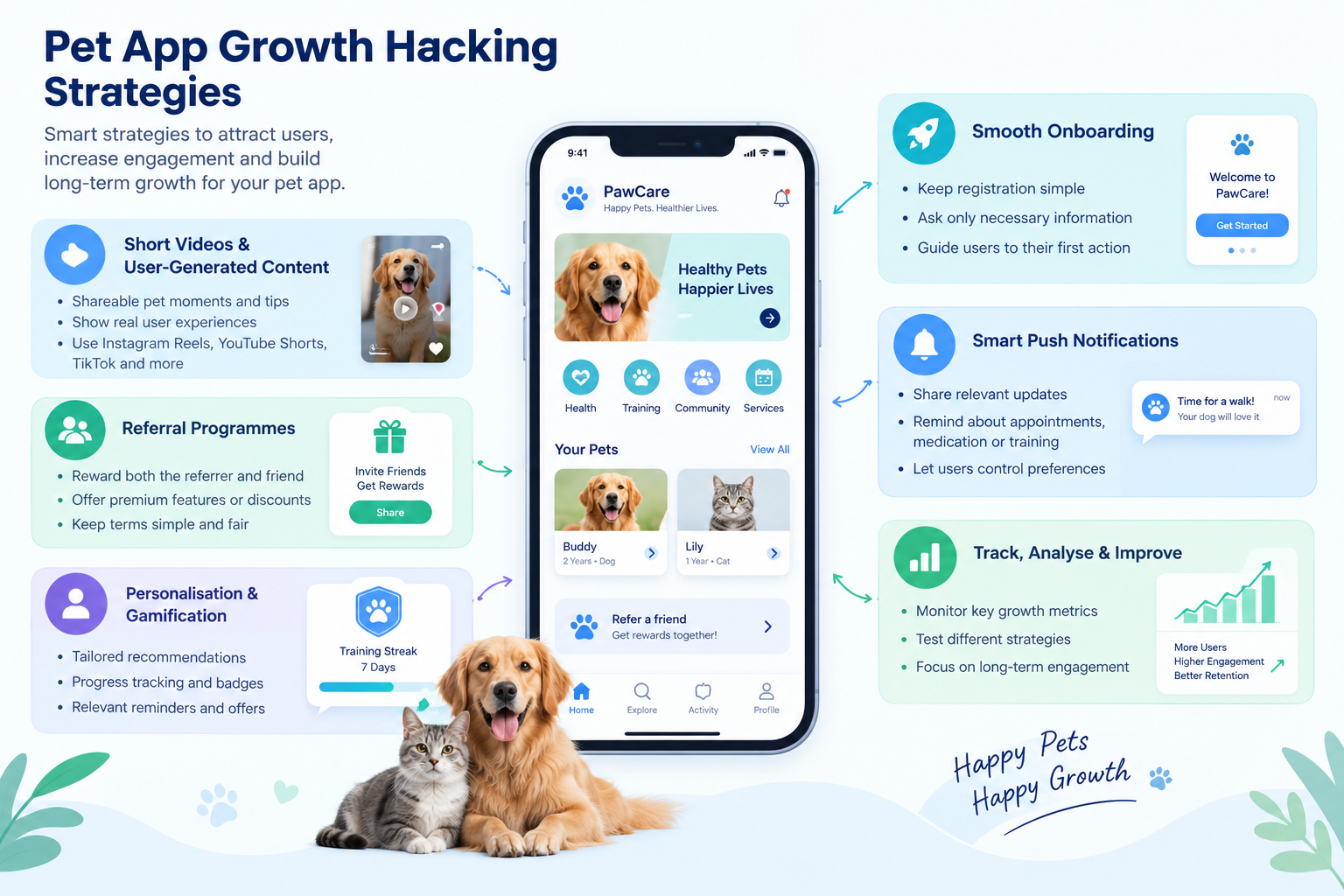
Build Shareable Features into the Product
A viral feature should be part of the app experience rather than an unrelated marketing add-on. Examples include pet birthday cards, adoption profiles, training progress, photo templates and community event invitations. Include a clear sharing option and a link that takes recipients to the relevant app page or content.
The shared content should be useful or entertaining on its own. Avoid forcing users to invite contacts before they can access essential features, as this can create friction and reduce trust.
Create a Referral Programme That Rewards Both Sides
A referral programme can encourage existing users to invite other pet owners. Depending on the business model, rewards might include premium features, discounts on eligible services, additional profile customisation or access to special community events.
Keep referral terms simple and track successful referrals rather than just invitation clicks. Prevent abuse with reasonable limits and transparent conditions. Rewards should support genuine recommendations instead of encouraging spam.
Use Short-Form Videos and User-Generated Content
Pet videos, practical care tips, training demonstrations and adoption stories can perform well on visual platforms because they are easy to understand and emotionally engaging. A pet app can invite users to share content with permission and feature selected stories in its marketing.
Test different creative approaches: educational videos, relatable pet-parent situations, feature demonstrations and real adoption journeys. Measure how many viewers visit the app page, install the app and complete a meaningful action—not only how many views a video receives.
Partner with Vets, Shelters and Pet Communities
Veterinary clinics, animal shelters, trainers, groomers and local pet communities already have relationships with relevant audiences. Partnerships can introduce an app to people who are more likely to find it useful.
For example, an adoption organisation might share verified animal profiles through an adoption app, while a veterinary clinic could direct interested customers to a pet-care reminder feature. Partnerships should be transparent, and any health-related information must be accurate and appropriately reviewed.
Improve App Store Discovery and Onboarding
A clear app name, relevant description, readable screenshots and a concise explanation of the main benefit help potential users understand the product. Once they install it, make the first session simple: let them create a pet profile, choose their interests and reach a useful feature quickly.
App performance matters too. Slow loading, confusing navigation and repeated permission requests can cause users to abandon an app. Google's Android app quality guidelines provide practical guidance for building reliable experiences across devices.
 Measure Growth, Retention and Referral Performance
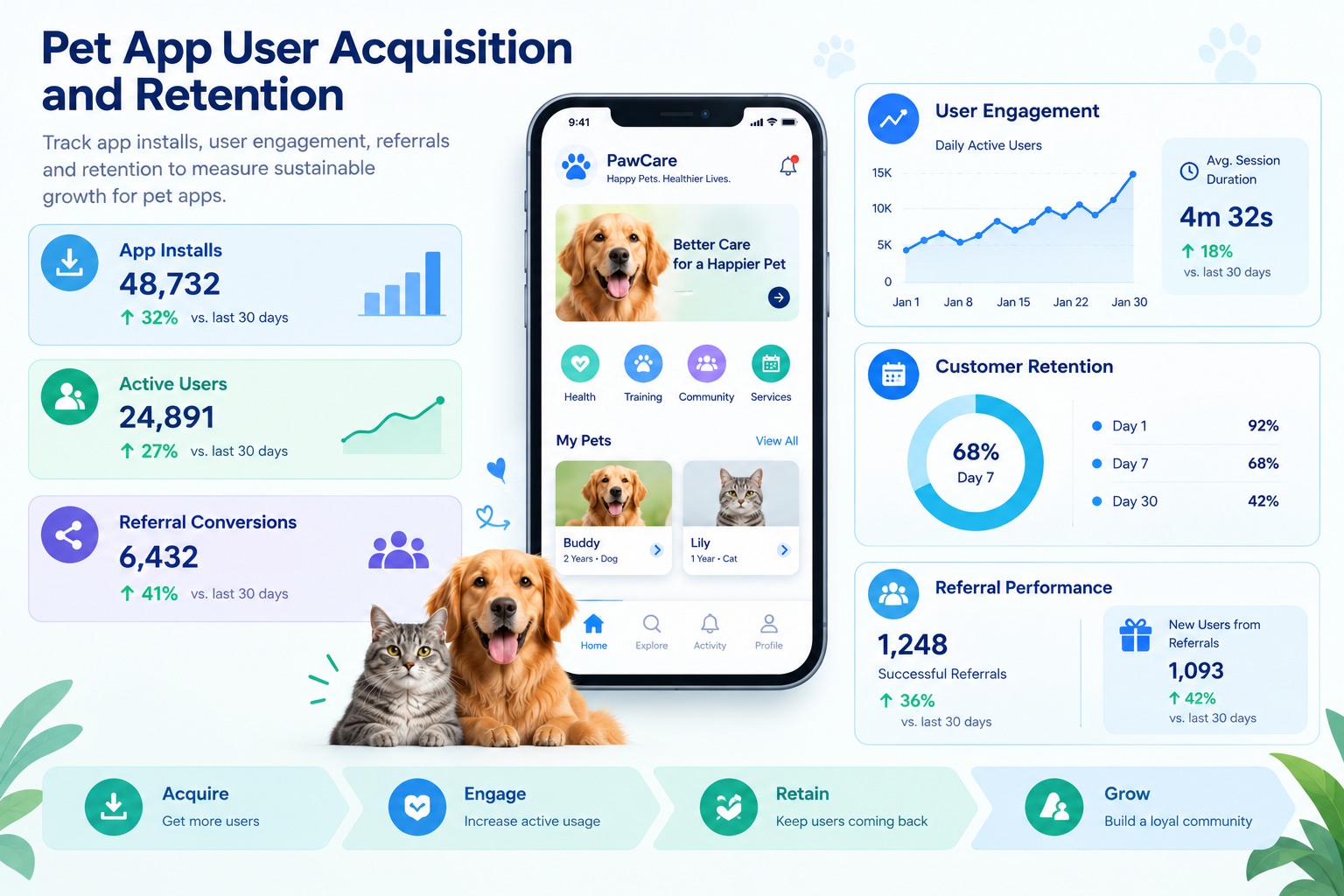
Growth hacking works best when each experiment has a measurable goal. Track the full journey from discovery to meaningful usage.
-
Acquisition: App-page visits, installs and cost per install.
-
Activation: Users who complete onboarding or perform a key first action.
-
Retention: Users who return after one, seven or thirty days.
-
Referral performance: Shares, referral visits, successful invitations and referred-user activation.
-
Business results: Paid conversions, bookings, subscriptions or other actions relevant to the app.
Tools such as Google Analytics for Firebase can help teams measure app events, understand user engagement and compare marketing channels. Choose events that reflect real value—for example, completing a pet profile, booking a service or setting a reminder—rather than treating every screen view as success.
Run small experiments before investing heavily. Test one onboarding change, referral incentive or campaign concept at a time where possible. Compare results over a meaningful period and avoid drawing conclusions from very small samples.
 How WEPROZTECH Can Help Build and Grow a Pet App
A pet app needs more than an attractive interface. Its long-term performance depends on reliable development, a smooth user journey, useful features, analytics and a marketing plan that reaches the right audience.
WEPROZTECH offers mobile app development services for businesses planning custom applications. Depending on project requirements, a pet app may include user and pet profiles, appointment booking, reminders, community features, referral tracking, payment integration and an administration dashboard.
Businesses can also explore AI consulting services to assess appropriate AI use cases and digital marketing services to plan audience acquisition and campaign measurement.
For related reading, visit WEPROZTECH's AI Agents for Small Businesses in India article to learn how automated workflows may support customer communication and service operations.
If you are planning a pet app or looking to improve an existing product, contact WEPROZTECH to discuss your development and growth requirements.
Conclusion
Viral pet app growth is not simply about getting more downloads. The strongest strategies begin with a genuine pet-owner need, make the product easy to use, encourage natural sharing and give users reasons to return.
Case studies from Pedigree Found, Pets at Home and The Pawfect Date show different approaches: problem-solving, personalisation and curiosity-led acquisition. By combining these lessons with referral experiments, community partnerships and reliable analytics, pet-app businesses can build a more sustainable path to growth.
Frequently Asked Questions (FAQs)
Growth hacking for pet apps involves using strategies such as referral programmes, shareable pet content, app store optimisation and user engagement experiments to increase downloads and retain users.
Examples include Pedigree Found, which focused on helping owners find missing dogs; Pets at Home VIP, which used personalised communications; and The Pawfect Date, which used awareness campaigns and app-install advertising.
A pet app can attract downloads through short-form videos, referral rewards, partnerships with veterinary clinics and animal shelters, app store optimisation and useful features that encourage users to recommend it.
Pet apps can improve retention through personalised reminders, pet health tracking, relevant content, community features, a simple onboarding process and regular improvements based on user feedback.
Businesses can measure growth by tracking app installs, onboarding completion, user retention, referral conversions, cost per install and meaningful actions such as appointment bookings or subscription purchases.
```