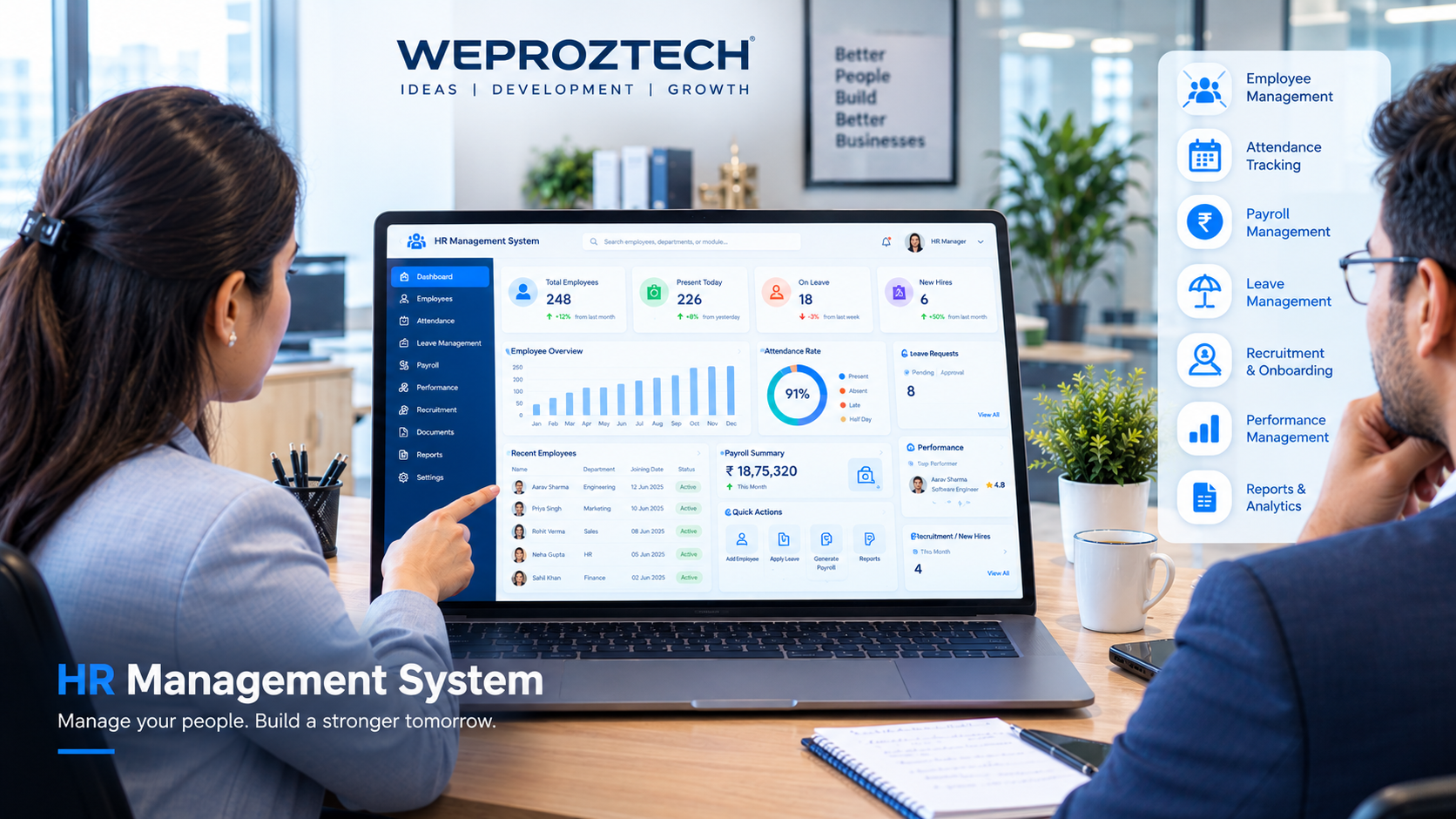
Managing employees becomes difficult as a business grows. HR teams have to handle employee records, attendance, leave, payroll, recruitment and performance on a regular basis. Managing these activities manually can take time and may lead to errors.
An HR management system (HRMS) brings these HR activities together on one digital platform. It helps businesses organise employee information, automate routine work and make HR processes easier for both employees and managers.
What Is an HR Management System?
An HR management system is software designed to manage employee-related activities digitally. It can store employee information and support processes such as attendance, leave, payroll, recruitment and performance management.
For example, employees can apply for leave or check their attendance through the system, while HR managers can manage records and generate reports from the same platform.
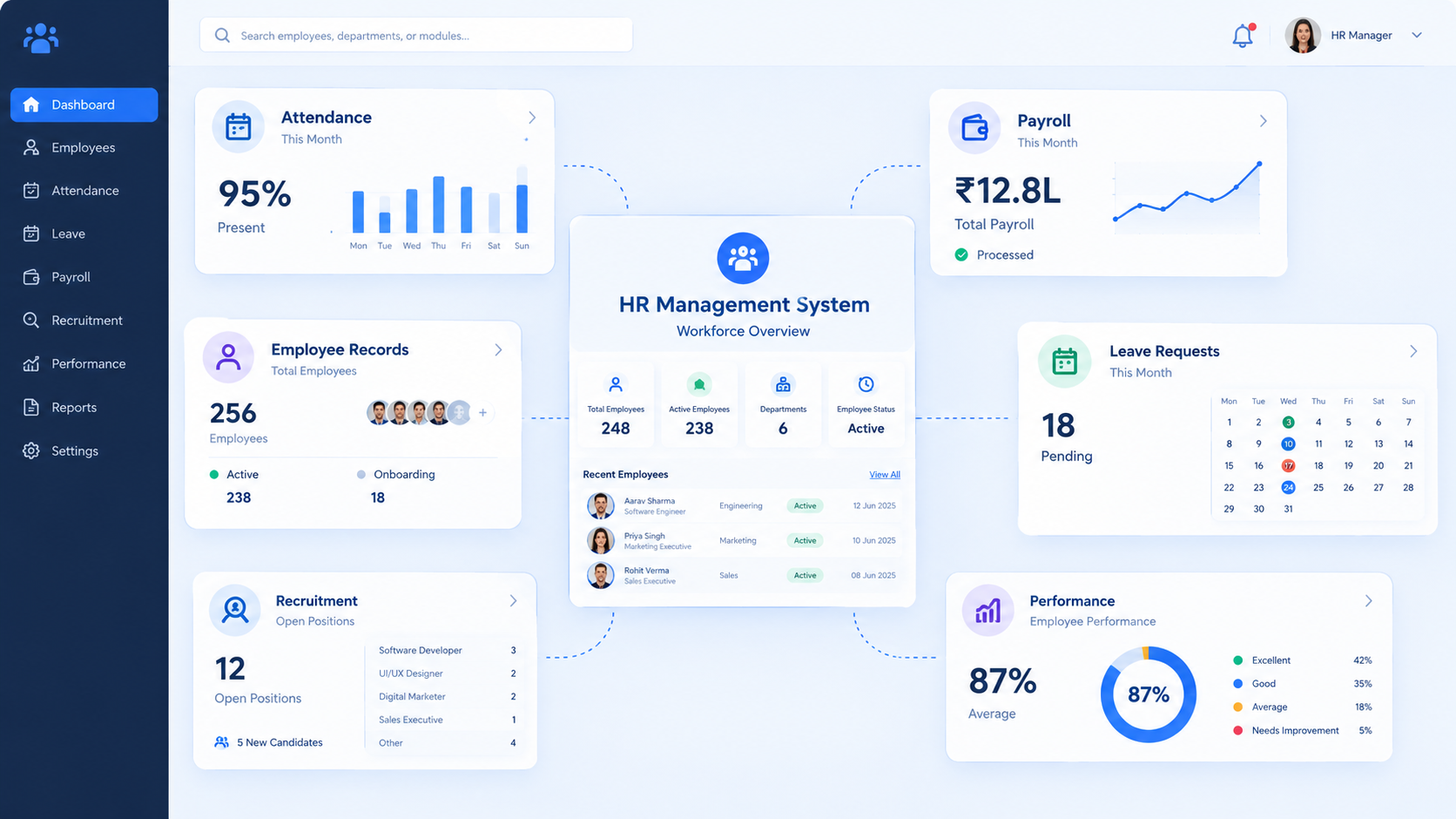
Key Features of HR Management System
A modern HRMS can include several features based on the organisation's requirements:
- Employee Management: Store and manage employee records in one place.
- Attendance & Leave: Track attendance, working hours, holidays and leave requests.
- Payroll: Manage salaries, deductions, allowances and payroll-related processes.
- Recruitment & Onboarding: Manage candidates, hiring stages and joining formalities.
- Performance Management: Set goals, conduct reviews and track employee performance.
- Employee Self-Service: Allow employees to access information and submit HR requests.
- Reports & Analytics: Generate useful reports for better workforce management.
 Benefits of Using HRMS
An HR management system can reduce repetitive administrative work and make HR operations more organised.
Key benefits include:
- Less paperwork and manual work
- Better employee data management
- Reduced errors in routine processes
- Faster attendance and leave processing
- Easier payroll management
- Better employee self-service
- Quick access to HR reports and information
- Scalable system for growing businesses
The main goal is simple: use technology to make HR work faster, more accurate and easier to manage.
Why HRMS Is Important for Indian Businesses
Indian businesses need to manage employee records, payroll, attendance and various statutory requirements as their workforce grows. Hybrid and remote working have also increased the need for employees and HR teams to access information digitally.
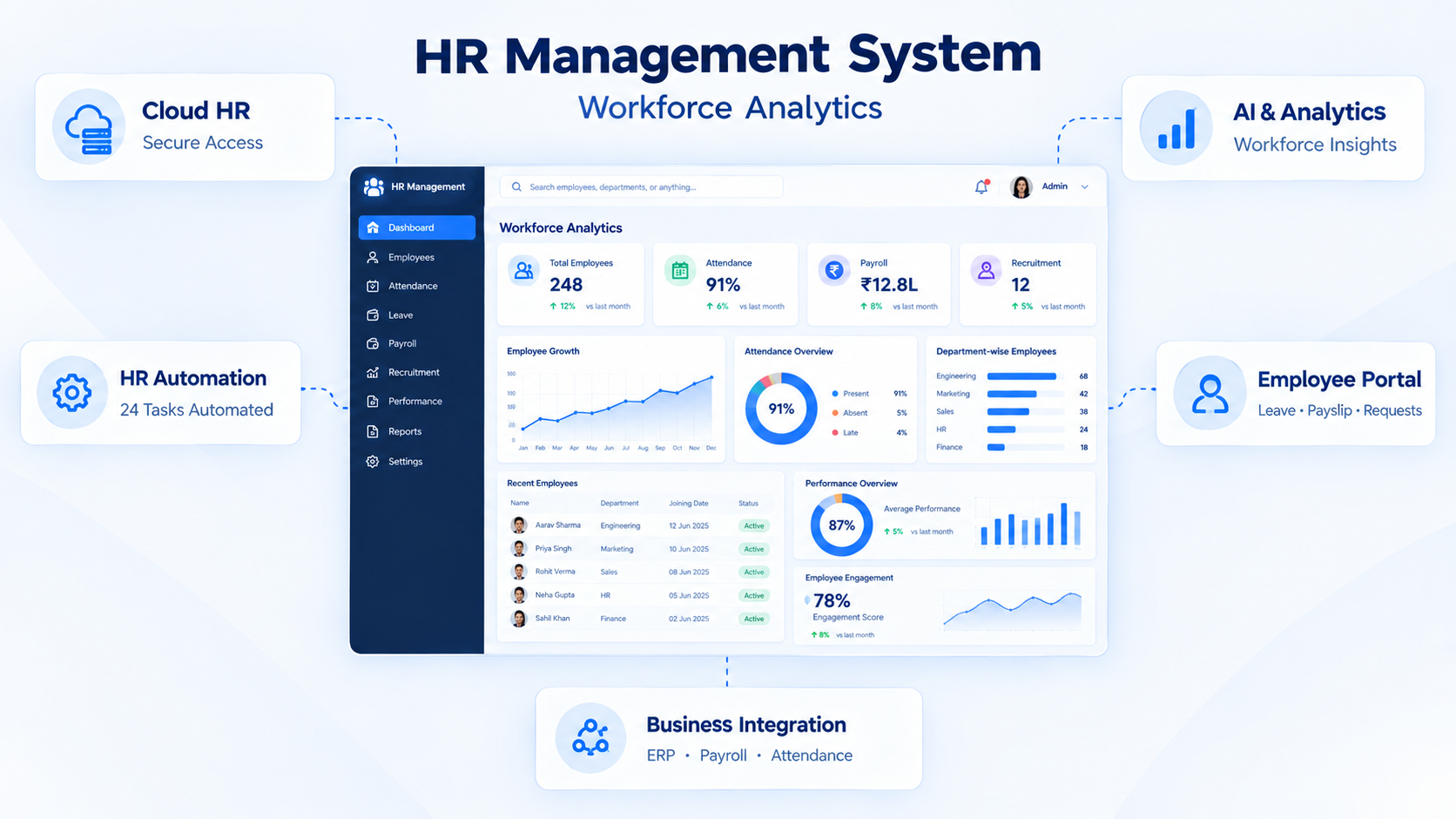
Cloud-based HRMS platforms can make this easier by providing secure access from different locations while keeping important HR processes connected.
A Brief History of HR Management Systems
HR management initially depended on paper records and spreadsheets. As organisations became larger, businesses started adopting dedicated HR software.
PeopleSoft was founded in 1987 by Dave Duffield and Ken Morris. Its first application in production focused on Human Resources in 1988. PeopleSoft later became part of Oracle's enterprise software portfolio.
Learn more about Oracle PeopleSoft
In India, HR technology gradually developed from basic payroll and employee records to complete systems covering recruitment, attendance, payroll, performance and employee services.
Government of India's e-HRMS
Digital HR is also being used by the Government of India. e-HRMS was launched on 25 December 2017 by the Ministry of Personnel, Public Grievances and Pensions. It introduced digital services such as employee information, leave, LTC, loans and advances and electronic service records.
e-HRMS 2.0 was later launched on 25 December 2022 with expanded services including transfers, deputation, training, service books, leave and reimbursements.
This reflects how HR technology has moved from simple record keeping towards complete employee lifecycle management.
 Image Source: Government of India / e-HRMS
Custom HRMS vs Ready-Made Software
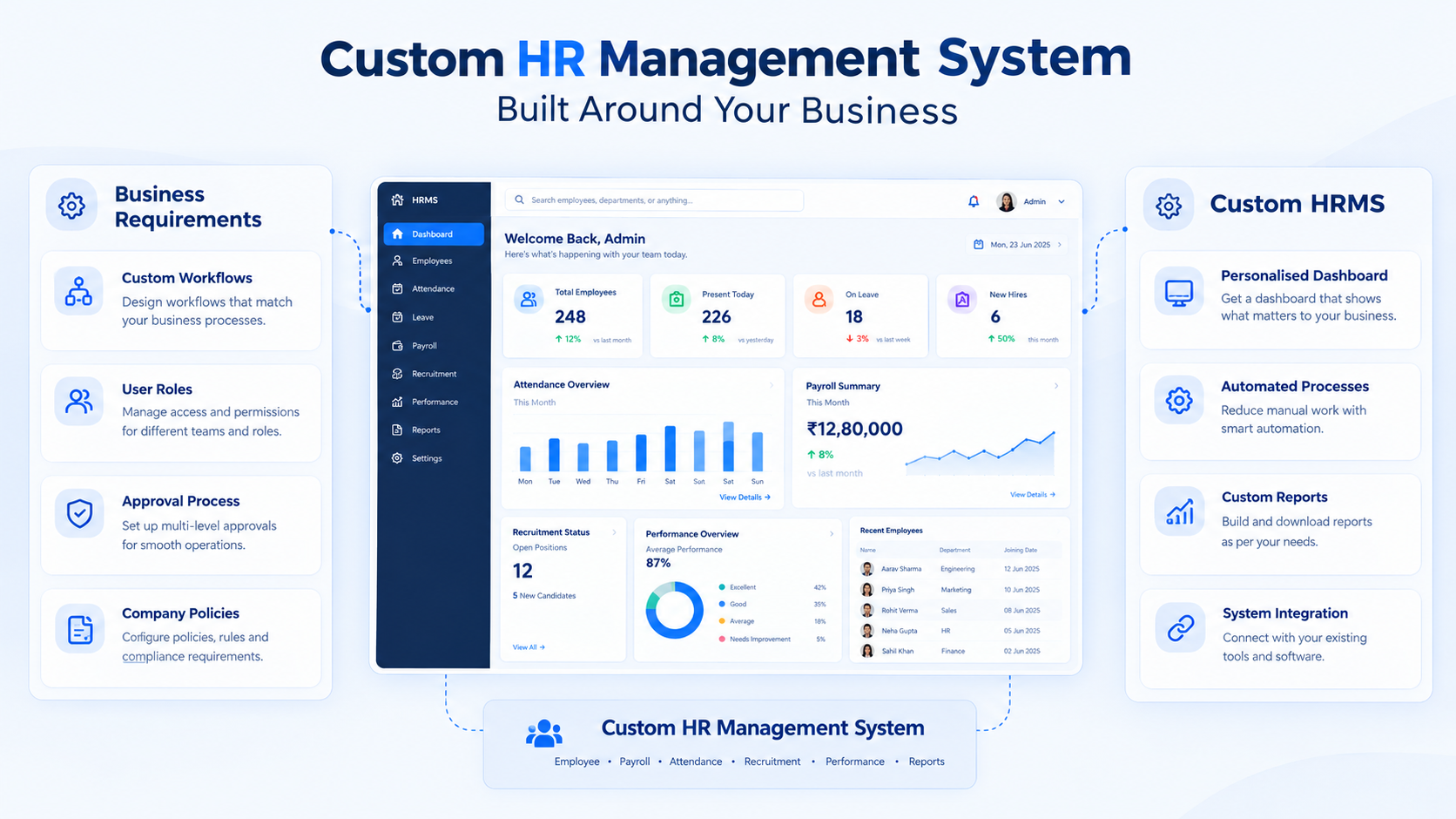
Ready-made HRMS can be suitable for businesses with standard requirements. However, companies with unique workflows may need more flexibility.
A custom HR management system can be developed according to specific requirements, including user roles, approval processes, reports and integrations.
For businesses looking for customised technology, explore WEPROZTECH's software development services.
 The Future of HRMS
Modern HR systems are increasingly using cloud computing, automation, analytics and AI to simplify HR processes.
However, businesses should choose technology based on their actual requirements rather than simply adding new features. A good HRMS should make everyday HR operations simpler while remaining secure, flexible and scalable.
 Conclusion
An HR management system helps businesses manage employees and HR operations through a centralised digital platform. From employee records and attendance to payroll, recruitment and performance, HRMS can reduce manual work and improve efficiency.
As businesses become more digital, a well-designed HRMS can become an important part of managing a growing workforce.
For custom HRMS or business software requirements, contact WEPROZTECH.
Frequently Asked Questions About HR Management System
1. What is an HR management system? +
An HR management system is software used to manage employee information, attendance, leave, payroll, recruitment, performance and other HR activities digitally. It helps businesses organise HR processes and reduce repetitive manual work.
2. What are the main features of HRMS? +
Common HRMS features include employee management, attendance and leave management, payroll, recruitment, onboarding, performance management, employee self-service and HR reports. Businesses can choose features according to their workforce and operational needs.
3. How does HRMS benefit businesses? +
HRMS can reduce paperwork and repetitive tasks while improving employee data management. It can also make attendance, leave and payroll processes faster, provide easier access to HR information and help managers generate useful workforce reports.
4. Is HRMS useful for small businesses? +
Yes. Small businesses can also use an HR management system to organise employee records, attendance, leave and payroll. Starting with the features a business actually needs can make HR operations easier without adding unnecessary complexity.
5. Can HRMS be customised? +
Yes. A custom HRMS can be developed according to a company's specific workflows, approval processes, user roles, reports and integrations. This can be useful for businesses whose HR processes are different from standard software workflows.
6. Can HRMS integrate with other business software? +
Yes. Depending on the technical requirements, an HRMS can integrate with payroll systems, accounting software, ERP platforms, biometric attendance systems, email services and other business applications. The available integrations depend on the systems being connected.
7. Is employee data secure in an HRMS? +
Security is important because an HRMS stores employee information and other sensitive business data. Access controls, authentication, encryption, secure data handling and regular backups should be considered when selecting or developing an HR management system.