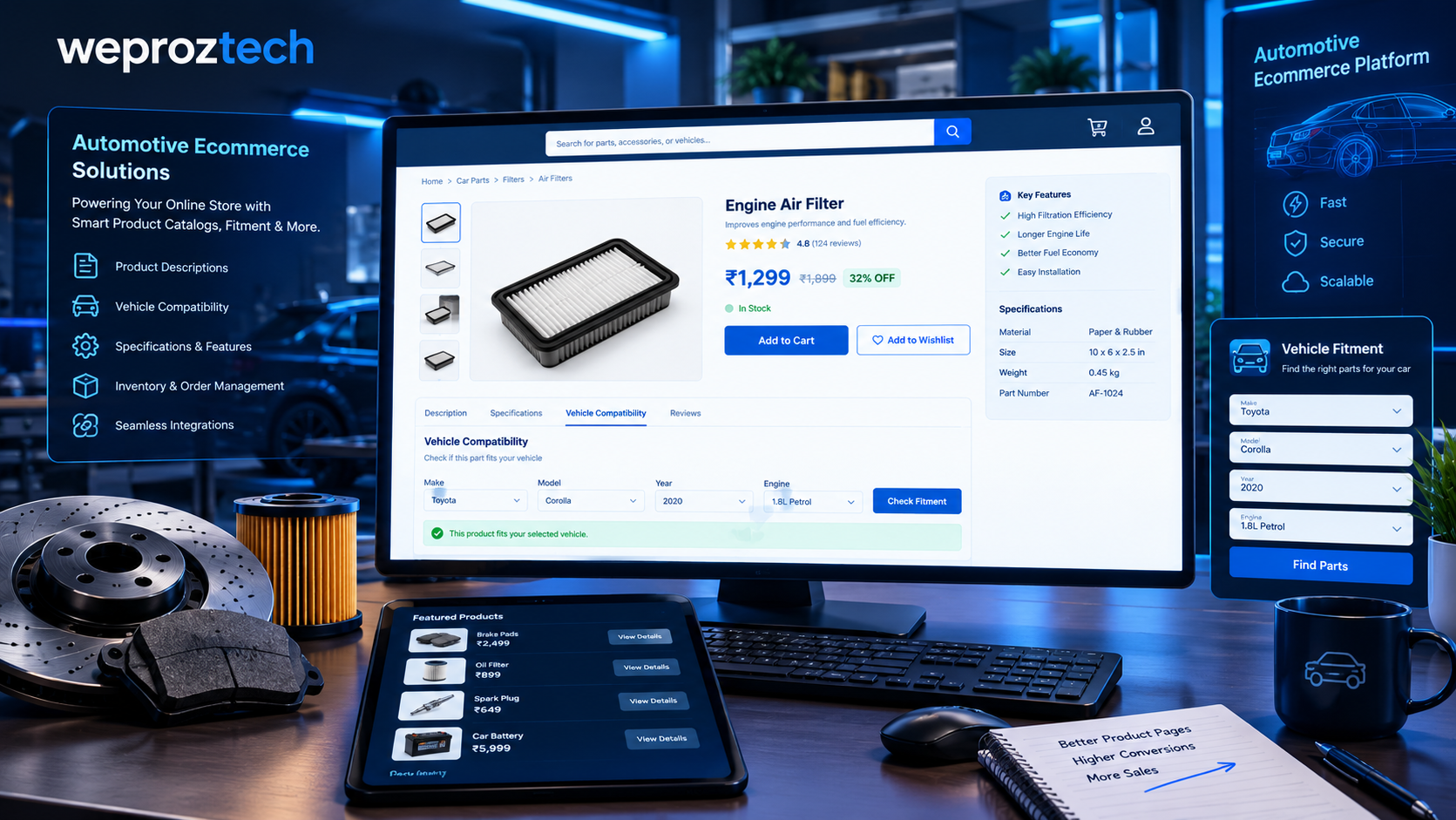
Selling automotive products online is not only about adding a product name, price and a few specifications. Customers usually want to know whether a product fits their vehicle, what it does, what is included, and why they should consider buying it. A clear automotive product description template for ecommerce can make this information easier to understand while also helping search engines identify the product page.
Whether you sell car accessories, replacement parts, lighting products, interior accessories, tools or maintenance items, the description should answer practical questions before the customer needs to ask them.
What Should an Automotive Product Description Include?
A useful automotive product description should begin with a short explanation of the product and its intended use. Avoid filling the opening paragraph with technical terms. Explain what the product is, who it is for and what problem it is designed to solve.
For example, instead of writing only Premium automotive floor mat with durable construction, a better description could explain that the mat is designed to protect the vehicle floor from everyday dirt, dust and spills, while also mentioning the compatible vehicle models or required measurements when those details are verified.
The main product information can then be organized around product type, compatibility, material, dimensions, important features, installation requirements and package contents.
Compatibility is especially important for automotive ecommerce. If a part is designed for specific vehicle models, years, engine variants or trim levels, those details should be clearly displayed. Do not guess compatibility. Use manufacturer information or verified fitment data before publishing it.
A Simple Automotive Product Description Template
A practical structure can look like this:
Product Name: Clear product name with relevant model or part information.
Short Description: One or two sentences explaining what the product is and its main purpose.
Key Features: Mention the most useful product characteristics in simple language.
Compatibility: List supported vehicle makes, models, years, variants or dimensions where verified.
Specifications: Include material, size, colour, weight, part number or other relevant technical information.
Installation: Explain whether the product is ready to install, requires tools or should be installed professionally.
Package Contents: Clearly state what the customer receives.
Important Note: Add fitment, installation, warranty or usage information that customers should know before ordering.
This format keeps the page useful without making it look like a collection of keywords.
How to Write Automotive Product Descriptions for SEO
SEO should support the product information rather than replace it. The primary phrase automotive product description template ecommerce can be used naturally in the introduction, title and supporting sections of this article, but individual product pages should target the actual product and customer search intent.
For example, a page selling a car air filter should focus on terms related to that specific product rather than repeatedly using a broad phrase such as automotive product description.
Product names, model numbers, relevant specifications and compatibility information can provide useful context. Use descriptive headings where they genuinely help customers, and avoid repeating the same sentence in different sections.
Product pages can also benefit from structured data. Google explains that Product structured data can help eligible pages appear with additional product information such as price, availability and reviews, subject to Google's requirements and policies.
You can also refer to the official Schema.org Product documentation when planning product information and structured data. Schema.org supports properties such as product descriptions, manufacturer part numbers and offers..
Automotive Ecommerce Product Description Example
Suppose an ecommerce store sells a universal car phone holder. A weak description might simply say:
High-quality car phone holder. Easy to install. Strong and durable.
That does not tell the customer much.
A more useful description could explain that the holder is designed to keep a compatible smartphone accessible while driving, describe its mounting method, supported phone size, adjustment mechanism and installation requirements. If the product has limitations, those should also be mentioned rather than hidden.
The same approach works for other automotive products.
For car floor mats, mention material, vehicle compatibility, dimensions, coverage and cleaning information.
For LED lights, explain the light type, voltage, compatibility, installation requirements and relevant specifications.
For car chargers, mention supported charging standards, ports, input requirements and device compatibility.
For replacement parts, provide the manufacturer or part number, vehicle compatibility and important fitment information.
The goal is simple: give the buyer enough accurate information to decide whether the product matches their requirement.
Common Mistakes to Avoid
One of the biggest mistakes in automotive ecommerce is writing descriptions that sound impressive but provide little useful information. Words such as premium, best, ultimate and high-performance should not replace actual specifications.
Another problem is copied manufacturer descriptions. Using the same text found across multiple stores can make a product catalogue feel repetitive and gives customers little reason to trust the information on your page.
Avoid making unsupported claims about durability, fuel savings, performance or safety. If a particular result depends on vehicle condition, installation or usage, explain that clearly.
It is also important not to create artificial compatibility information simply to capture additional searches. Automotive customers depend heavily on accurate fitment, so incorrect vehicle information can lead to returns, complaints and poor customer experience.
Building a Better Automotive Ecommerce Product Page
The description is only one part of a strong product page. Product images, specifications, pricing, availability, reviews, delivery information and clear calls to action should work together.
For a larger automotive store, the ecommerce system may also need product filters, vehicle-based search, inventory management, payment integration, customer accounts, order tracking and admin controls.
This is where a custom ecommerce platform can become useful. WEPROZTECH's official technology portfolio includes e-commerce solutions alongside website development and custom software capabilities.
If your store receives a large number of product enquiries, customer communication can also be connected with WhatsApp workflows. WEPROZTECH has an existing article covering WhatsApp automation for product enquiries, customer support and follow-up workflows.
For larger stores, an to the existing WhatsApp CRM article can also be useful when discussing lead management and customer conversations.
Automotive Product Description Template: Quick Checklist
Before publishing an automotive product page, check whether it answers these questions:
- What exactly is the product?
- What vehicle or application is it designed for?
- Is compatibility verified?
- What are the important specifications?
- What material or construction does it use?
- What is included in the package?
- Does installation require tools or professional assistance?
- Are there any limitations or important fitment notes?
- Are the product images clear and relevant?
- Are price and availability accurate?
- Is the product information consistent across the website?
For larger ecommerce stores, product information should ideally come from a structured catalogue so that descriptions, specifications and availability can be managed consistently.
If your automotive ecommerce website handles a large catalogue, hosting and server performance also become important. WEPROZTECH's NVMe cloud and VPS hosting solutions are designed for websites, applications and high-traffic ecommerce environments.
Final Thoughts
A good automotive product description template for ecommerce should make product information easier to understand, not simply make the page longer. The most useful descriptions combine a clear introduction with accurate features, specifications, compatibility information and practical buying details.
For automotive stores, accuracy matters as much as SEO. A well-written description can help customers understand the product before ordering, while structured product information can also help search engines interpret the page.
If your business needs an automotive ecommerce website, custom product catalogue, vehicle-fitment system, ecommerce development or connected customer communication, WEPROZTECH can help plan the required technology around your actual business workflow. WEPROZTECH official website
Frequently Asked Questions (FAQ)
An automotive product description template is a structured format used to present vehicle parts, accessories or automotive products clearly on an ecommerce website. It can include product features, specifications, compatibility, benefits, installation details and important buying information.
A good description should include the product name, key features, specifications, compatibility, material or construction details, available sizes or variants, installation information and any important usage instructions. The information should be easy for customers to scan before making a purchase.
Use the main product keyword naturally in the product title, introduction, headings and relevant sections. Include related terms such as vehicle make, model, part type, compatibility and product specifications where they genuinely apply. Avoid unnecessary keyword repetition.
Automotive products often have specific compatibility and technical requirements. A detailed description helps customers understand what the product does, which vehicles or models it fits, and what they should check before ordering.
Yes. Compatibility is particularly important for automotive products. Where applicable, mention the supported vehicle make, model, year, engine type or part number so customers can check whether the product matches their vehicle.